


Europe has endured another week of extraordinary weather, where blistering heat gave way to violent storms, destructive tornadoes, and fast-moving wildfires, exposing the growing volatility of the continent’s climate.
Across France, powerful supercell storms unleashed damaging winds and a reported tornado strong enough to overturn heavy vehicles, ripping through communities, destroying infrastructure, and leaving thousands without electricity. Emergency services worked relentlessly as rescue crews cleared roads, restored power, and responded to widespread storm damage.
In neighbouring Germany, severe thunderstorms brought torrential rain, lightning, and destructive winds. Fallen trees, flash flooding, and transport disruption claimed lives and prompted a large-scale emergency response. Firefighters, medical teams, and civil protection agencies were deployed around the clock as authorities urged residents to remain indoors and avoid unnecessary travel.
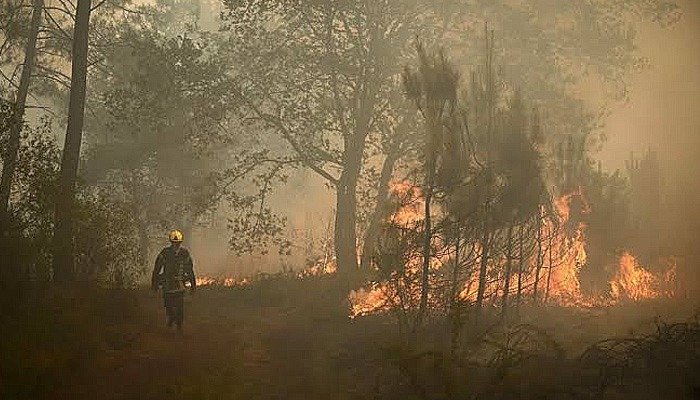
Meanwhile, the Fontainebleau Forest wildfire near Noisy-sur-École, south of Paris, emerged as one of the region’s most significant fires in recent years. Nearly 2,000 hectares of woodland were scorched, forcing the evacuation of around 1,000 residents. More than 400 firefighters, supported by helicopters and water-bombing aircraft, battled the flames under exceptionally difficult conditions, while investigators examined the possibility of deliberate ignition.
These disasters followed an intense heatwave that had already gripped much of Europe. Record-breaking temperatures dried forests, weakened ecosystems, reduced river levels, strained electricity supplies, and heightened wildfire danger across several countries. The arrival of unstable weather transformed that accumulated heat into explosive atmospheric energy, triggering violent thunderstorms, destructive hail, and localized tornadoes.
The unfolding crisis serves as another reminder that Europe’s weather extremes are becoming increasingly interconnected. Heat, drought, wildfire, and severe storms are no longer isolated events—they are part of a rapidly evolving pattern that challenges emergency services, infrastructure, agriculture, public health, and community resilience.
As firefighters continue to contain remaining hotspots and recovery teams restore essential services, governments across Europe are renewing calls for stronger climate adaptation, improved disaster preparedness, and greater investment in resilient infrastructure.
For readers across the globe, the message is unmistakable: today’s climate emergencies do not unfold one disaster at a time. They arrive in cascading waves, where heat fuels fire, fire weakens landscapes, and unstable skies unleash storms of exceptional power. The resilience of communities will increasingly depend not only on emergency response but also on long-term preparedness, environmental stewardship, and international cooperation.
