


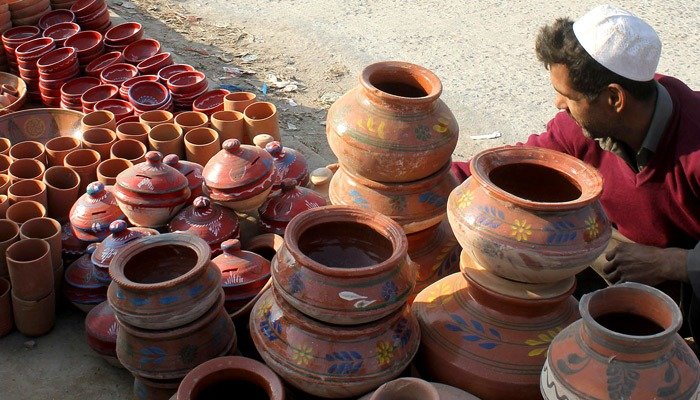
ISLAMABAD: For centuries, handmade clay pots have been an integral part of Pakistan’s cultural and domestic life, reflecting a tradition passed down through generations of skilled potters. From cooking vessels and water pitchers to decorative items, earthenware once occupied a central place in households across the country. However, with the rapid adoption of glass, steel and aluminum utensils, the use of clay pots has declined sharply, putting one of Pakistan’s oldest crafts at risk.
Pottery has long been more than just a profession; it has been a way of life for thousands of families in regions such as Lahore’s outskirts, Gujrat, Sialkot, Multan and other parts of Punjab. The rhythmic turning of the potter’s wheel and the careful shaping of wet clay have symbolized patience, skill and artistic expression. In the past, clusters of pottery units thrived near major cities, supplying everyday household items to local markets and even exporting to foreign countries.
Today, only a limited number of pottery workshops remain operational. Rising energy costs for firing kilns, shrinking demand and competition from factory-made utensils have forced many craftsmen to abandon the trade. The range of products has also narrowed, with potters now focusing on a few items such as cooking handis, matkas, plant pots, vases and decorative pieces. For many artisans, sustaining their families through pottery alone has become increasingly difficult.
Despite these challenges, handmade clay pots still hold cultural, environmental and health value. Earthenware is known for its natural cooling properties and its ability to enhance the flavor of food cooked in it, making it a healthier alternative to metal cookware. In recent years, a small but growing segment of health-conscious consumers, particularly from urban middle and upper-middle classes, has shown renewed interest in clay utensils for cooking and dining.
Traditional foods and trends such as tandoori tea and dishes cooked in earthen pots have also created limited new opportunities for potters, though the demand is not yet strong enough to revive the industry fully. Pottery exports, which once contributed valuable foreign exchange, have also declined due to changing market conditions and regional uncertainties.
Artisans believe that the survival of Pakistan’s handmade pottery depends on public awareness, government support and efforts to promote traditional crafts both locally and internationally. Reviving the culture of cooking and living with clay pots could not only protect a centuries-old heritage but also restore livelihoods for thousands of skilled craftsmen. Without timely intervention, this rich tradition risks fading into history, remembered only in museums and textbooks rather than in everyday life.
