


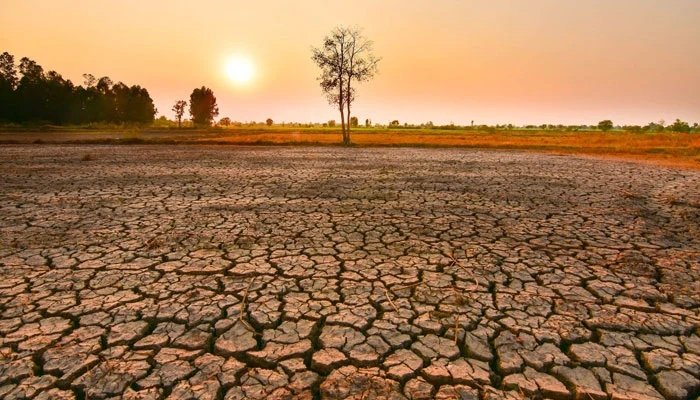
El Niño Threat: This year, the Earth is facing a double-edged sword of global warming.
Climate change is increasing the temperature of the Earth due to the release of toxic or greenhouse gases, but along with this, the climate phenomenon El Niño has also begun.
El Niño is a climate phenomenon that will further increase the temperature of the world, which is already experiencing extreme heat.
A significant increase in the intensity of heat will cause deaths.
According to a statement issued by the World Meteorological Organization (WMO), under the United Nations, El Niño will become stronger in the coming months and its intensity is likely to continue until February 2027.
The WMO said that El Niño will peak by the end of this year, while its effects will be felt in 2027 as well.
The statement said that El Niño has begun and will intensify significantly in the coming months, which will have a significant impact on temperatures and rainfall, which may lead to floods, droughts and extreme heat.
What are El Niño and La Niña?
El Niño is a weather phenomenon that results in a large part of the Pacific Ocean becoming warmer than normal and also increasing the overall temperature of the Earth.
In contrast, during La Niña, the temperature of the Pacific Ocean decreases.
The world experiences both between 3 and 7 years, with La Niña usually lasting longer.
What happens during El Niño?
Easterly winds carry warm surface water from the equatorial Pacific Ocean towards Australia and Indonesia and away from South America.
As a result, warm surface water accumulates in the western Pacific Ocean while cold water from the eastern Pacific Ocean rises to the surface from deep below.
But during El Niño, easterly winds weaken and warm water spreads across the Pacific.
In contrast, during La Niña, easterly winds are stronger than usual and the surface of the eastern Pacific Ocean becomes cooler.
How will El Niño affect global warming?
Scientists have suggested that the intensity of heat on Earth has already increased due to the use of fossil fuels, but El Niño will increase it much more.
UN Secretary-General Antonio Guterres said that El Niño is taking us by surprise before our eyes.
He said that sea surface temperatures are rising, overall temperatures are rising and the world is facing the threat of unpredictable weather.
The last wave of El Niño was observed in 2023, which resulted in 2024 being the warmest year in world history.
This time, the intensity of El Niño will peak by the end of this year, but the heat emitted from the oceans will slowly reach the atmosphere and will increase the global temperature next year.
According to the WMO, we are seeing the effects of El Niño in the form of floods and droughts in different regions of the world, and the intensity of these effects will also increase as the intensity of the climate trend increases.
It should be noted that the ocean absorbs more than 90 percent of the heat trapped in greenhouse gases emitted from crude oil and other activities.
The heat absorption capacity of the ocean is much better during La Niña.
But during El Niño, the heat absorbed by the ocean is released into the atmosphere, which is why the global average temperature increases by 0.2 degrees Celsius during El Niño.
The effects of El Niño are concentrated on the entire global climate system.
Rainfall begins to decrease during the monsoon in the subcontinent, however, there may be more rain in drought-affected African regions.
El Niño could also increase the risk of hurricanes, which could affect countries such as the United States, India, Bangladesh, Japan and Korea.
The WMO has predicted above-normal temperatures from September to November, and this will happen in almost every region of the world.
