


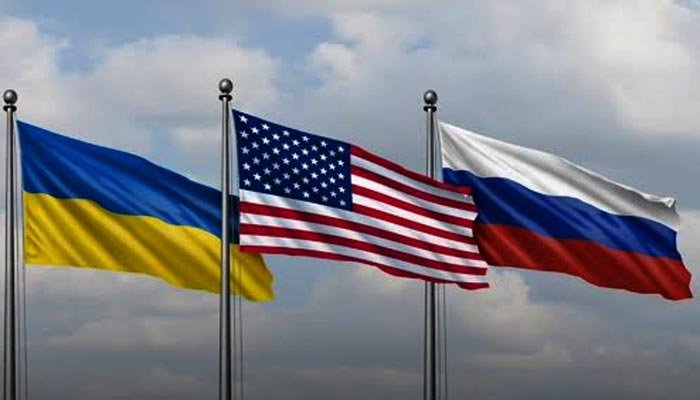
US-mediated negotiations on November 10–11 will focus on security guarantees, a possible ceasefire and diplomatic steps to end the war, as major differences remain between Moscow and Kyiv.
ABU DHABI, November 9 (News Desk): Ukraine and Russia are preparing to resume peace negotiations in Abu Dhabi on November 10–11 under United States mediation, with post-war security guarantees, de-escalation measures and possible steps towards ending the nearly five-year conflict expected to dominate the discussions.
The upcoming meeting will bring together senior officials from Ukraine, Russia and the United States, marking the resumption of trilateral negotiations since February 2026. US special envoy Steve Witkoff announced the latest round, with US President Donald Trump’s representatives seeking progress towards a broader settlement.
According to the Associated Press (AP), the Ukrainian delegation will be led by Rustem Umerov, while Russia’s delegation will be headed by Vladimir Medinsky, an aide to President Vladimir Putin. Washington is expected to be represented by Witkoff and Jared Kushner, Trump’s special envoy.
US Secretary of State Marco Rubio has identified security guarantees as one of the central issues in the negotiations, stressing that discussions must address Ukraine’s post-war security arrangements and the wider security framework of Europe. He indicated that proposals remain at an early stage and no final agreement has been reached.
Ukrainian President Volodymyr Zelenskyy has repeatedly called for credible international guarantees to prevent renewed Russian aggression. Kyiv is also seeking a ceasefire as an initial step towards a comprehensive peace settlement.
Moscow, however, maintains demands that include Ukrainian withdrawal from territories claimed by Russia, restrictions on Ukraine’s military capabilities and a commitment against NATO membership. Kyiv has rejected territorial concessions and military restrictions that could undermine its long-term security.
European involvement is also emerging as an important element of the diplomatic process. The European Union is expected to send senior representatives, alongside officials from France, Germany and the United Kingdom, although Russia has indicated that the main negotiations will remain trilateral, involving Moscow, Kyiv and Washington.
European Commission President Ursula von der Leyen has reiterated support for restoring freedom of navigation in the Black Sea and securing a ceasefire covering food and energy infrastructure.
Despite renewed diplomatic engagement, substantial differences remain over territorial control, military arrangements and the future security of Ukraine and Europe. Continued fighting and attacks on critical infrastructure further complicate efforts to reach an agreement.
The Abu Dhabi discussions are therefore being viewed as an important diplomatic opportunity rather than a guaranteed breakthrough. Their outcome could determine whether the parties can move towards a workable ceasefire and establish the foundations for a lasting settlement.
